RadarModel Now Watches Mistral, Groq, xAI, Azure OpenAI and Amazon Bedrock
RadarModel AI started with OpenAI, Anthropic, Google and OpenRouter. Plenty of apps call models somewhere else: through Azure because that’s where the company’s cloud contract is, through Bedrock for the same reason on AWS, through Groq for speed, or straight from Mistral and xAI. RadarModel 0.4 reads all five. It’s open source under the Apache License 2.0, and the code is on GitHub.
The promise doesn’t change with the provider. A model you call that leaves the list is breaking once a second scan confirms it, a retirement date showing up is a warning, and an outage, a rate limit or a half-written answer is a failed scan that leaves the stored list as it was.
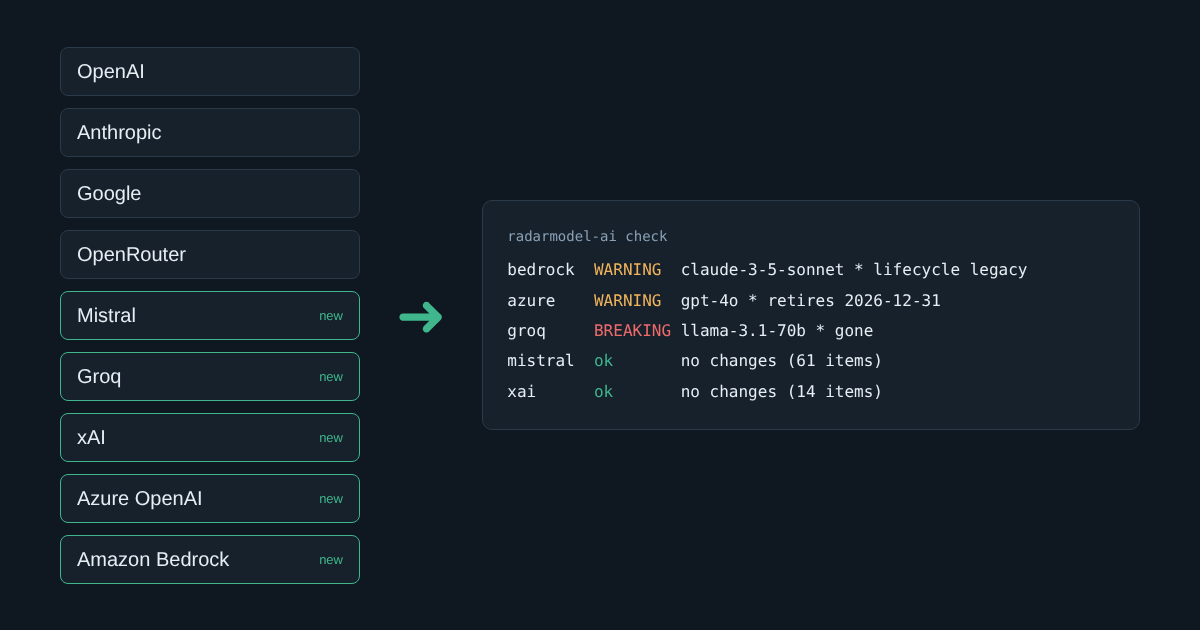
Same check, same report, nine model lists.
What each one tells you
- Amazon Bedrock. Each model’s lifecycle (active or legacy) and its end-of-life date. Legacy is a warning: the model still works, but not for long. RadarModel signs the request with your AWS keys and needs only
bedrock:ListFoundationModels. - Azure OpenAI. The models your resource can deploy, with the date each one stops serving. Azure publishes those dates for almost everything, so this is where retirements show up first.
- Groq. Context window, output limit and whether a model is still active. Groq retires models quickly, which makes it the one most worth watching.
- Mistral. Context length and deprecation dates.
- xAI. The model IDs. xAI also answers to short aliases such as
grok-4that may not be in its list, so watch those with a pattern (xai:grok-4*).
radarmodel-ai scan knows the new names too: Bedrock IDs such as anthropic.claude-sonnet-4-5-20250929-v1:0, Mistral’s mistral-large-latest, grok-4, Groq’s llama-3.3-70b-versatile, and LiteLLM’s bedrock/, azure/, mistral/, groq/ and xai/ prefixes. On the three agents we checked by hand it found 82 more models, 36 of them Azure names in aider’s settings.
How it was tested
Every failure the original four providers are tested against, the five new ones are too: errors, rate limits, maintenance pages, empty and cut-off lists, keys that must never reach an error. The tests run against answers shaped like each provider’s documented ones, and the Bedrock signature is checked against the one AWS’s own Python library makes. They don’t run against the live services, so the first real scan of each is worth a look.
Two independent reviews read the new code before release. Among what they found: ordinary strings such as amazon.s3 read as Bedrock model names, and a duplicate-entry shortcut that would have let a list that repeats a page hide the page it skipped. Both are fixed, each with a test.
Download RadarModel, then see the reference for each provider’s settings.